Mediterranean Forests as Strategic Investments for Climate Resilience17nov13:0014:0013:00 - 14:00(GMT+03:00)

Event Details


Forests beyond the tropics are climate infrastructure, but today they are underfinanced and often financed in the wrong direction. 

From Belém to Antalya. COP30 put tropical forests at the heart of the agenda with a new fund for their conservation. COP31 is the moment to ask the next question: how do we finance the resilience of Mediterranean and temperate forests, which face a different set of threats? 

A shared Mediterranean challenge. Mediterranean countries face larger and more frequent wildfires, prolonged drought and rural abandonment. Forests are at the frontline of adaptation: they regulate water, protect soils, reduce fire risk when well managed and store carbon. When they fail, the costs fall on communities, infrastructure and business. 

A policy window. The session connects three agendas: the alignment of financial flows under the Paris Agreement (Article 2.1c), the reform of harmful incentives and the mobilization of private finance under the Kunming-Montreal Global Biodiversity Framework (Targets 18 and 19), and the EU Nature Restoration Regulation, whose national restoration plans need financing. 

Why business and finance. Companies depend on healthy forests through supply chains, water and operational risk. Banks and investors are starting to measure nature-related risk. The missing piece is investable projects and clear rules that turn that awareness into capital on the ground. 

OBJECTIVES

The session aims to: 

  • Show what the data says about business and financial exposure to forests. 
  • Present the science on why diverse, well-managed forests withstand fire and drought better. 
  • Identify the instruments and rules that make forest resilience investable. 
  • Discuss how to redirect public and private finance towards resilient Mediterranean and temperate forests 

The session aims to:

  • Forest restoration & investing in resilience: Redirect existing subsidies towards close-to-nature management, restoration and fire prevention. 
  • Finance: from seeing forests as a risk to seeing them as an investment opportunity. Use data and standards to price forest-related risk and structure bankable projects. 
  • Business: ecosystems services like clean air, water, carbon storage and biodiversity are largely invisible in traditional finance. To assign monetary value to ecosystem services make nature’s value visible in decision-making and investment allocations. 

Moderator

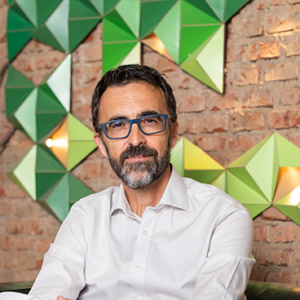
Félix Romero

Félix Romero Cañizares

Director, Biodiversity Foundation
Félix Romero Cañizares (born June 1975) currently serves as Director of the Biodiversity Foundation of the Ministry for the Ecological Transition and the Demographic Challenge. He holds a degree in Environmental Sciences from the University of Castilla-La Mancha (Toledo) and a Technical Engineering degree in Forestry from the Polytechnic University of Madrid. He has also completed several master’s programmes in Business Administration (University of Chichester, United Kingdom), International Cooperation (European Institute CAMPUS STELLAE, Santiago de Compostela) and Foreign Trade (College of Political Scientists and Sociologists, Madrid).Before being appointed Director of the Biodiversity Foundation, he served as Director-General for the Natural Environment and Biodiversity at the Regional Ministry for Sustainable Development of the Government of Castilla-La Mancha from November 2019 to July 2023.Previously, he held various positions at the Forest Stewardship Council (FSC), including Global Market Development Manager, Regional Director for Europe and President of FSC Spain.Prior to joining FSC International, he served as Head of the WWF Spain Forest Programme from March 2002 to September 2012.

Learn More

Speakers for this event

  • Alícia Pérez-Porro

    Head of Policy Engagement & Institutional Relations

    CREAF

  • Camila Cosse

    Global Advocacy Officer

    FSC International

  • Eva Mayerhofer

    Head of Policy Implementation Unit

    European Investment Bank (EIB)

  • Kendall Damon

    Climate Policy Associate

    The Nature Conservancy (TNC)